
INFRARED THERMOGRAPHY

Environmental site characterization experts. Phase I & II assessment.

Engineering studies and materials quality control.

We carry out a multitude of tests on granular materials.

Building inspection and technical assessment, evaluation, and monitoring.
Engineering studies and materials quality control.
We carry out a multitude of tests on granular materials.
Building inspection and technical assessment, evaluation, and monitoring.
Infrared Thermography
Le volet bâtiment du Groupe SCP offre une expertise en inspection par thermographie infrarouge pour le diagnostic des bâtiments.

Groupe SCP uses infrared thermography as a complementary inspection tool to better understand the behaviour of building components and locate certain anomalies that might otherwise remain invisible.
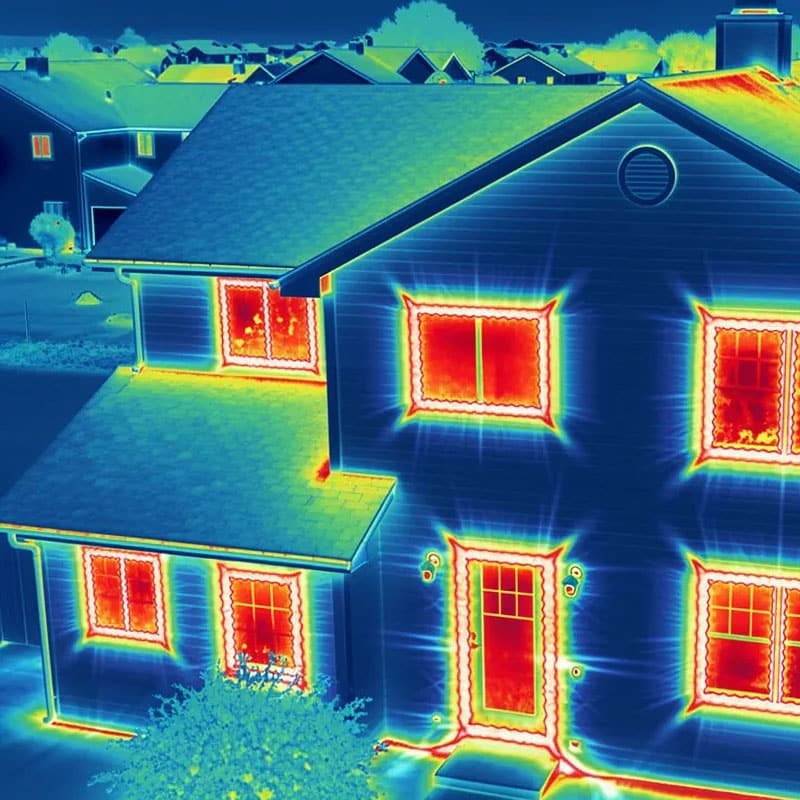

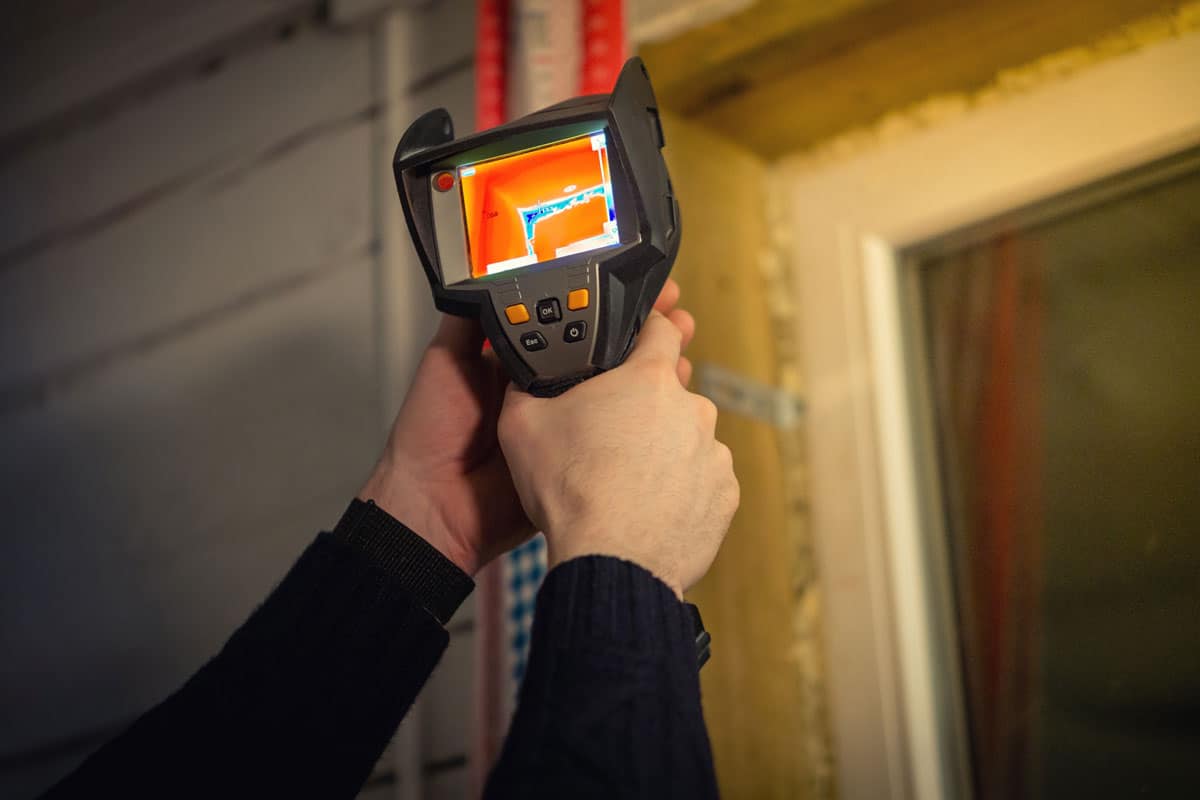
Infrared Thermography Inspection | Building Diagnostics and Thermal Anomaly Detection
Groupe SCP offers specialized infrared thermography services for the inspection and assessment of commercial, industrial, institutional and multi-residential buildings.
Thermography makes it possible to observe and document temperature variations on the surface of materials that are not visible to the naked eye.
- Potential water infiltration.
- Moisture.
- Insulation deficiencies.
- Thermal bridges.
- Air leakage.
- Building envelope anomalies.
- Potential roofing issues.
When used under appropriate conditions and interpreted within the context of the building, thermal imaging is a particularly useful investigation tool for guiding the diagnostic process and targeting areas that require further analysis.
Thermography as Part of a Preventive Maintenance Strategy
Thermography can also be integrated into a building maintenance and asset management strategy.
Rather than intervening only when water infiltration or another problem becomes visible, certain inspections can help identify anomalies requiring particular attention.
For building managers, this approach can help to:
- Target investigations
- Document certain conditions
- Plan repairs
- Monitor the evolution of a problem
- Prioritize certain interventions
- Reduce destructive investigations
Thermography therefore becomes a complementary preventive building management tool.
Groupe SCP | Infrared Thermography Expertise
Groupe SCP uses infrared thermography for building inspections as a complementary tool in the investigation of various building issues.
Our approach is designed to:
- Observe.
- Compare.
- Identify thermal anomalies.
- Interpret results within their context.
- Target complementary investigations.
- Document conditions.
- Guide interventions when necessary.
Whether the issue involves water infiltration, roofing, insulation, a thermal bridge or the building envelope, thermography can provide a different perspective on conditions that visual inspection alone may not always identify.
Because in building inspection, what is invisible to the naked eye can sometimes leave a thermal signature.
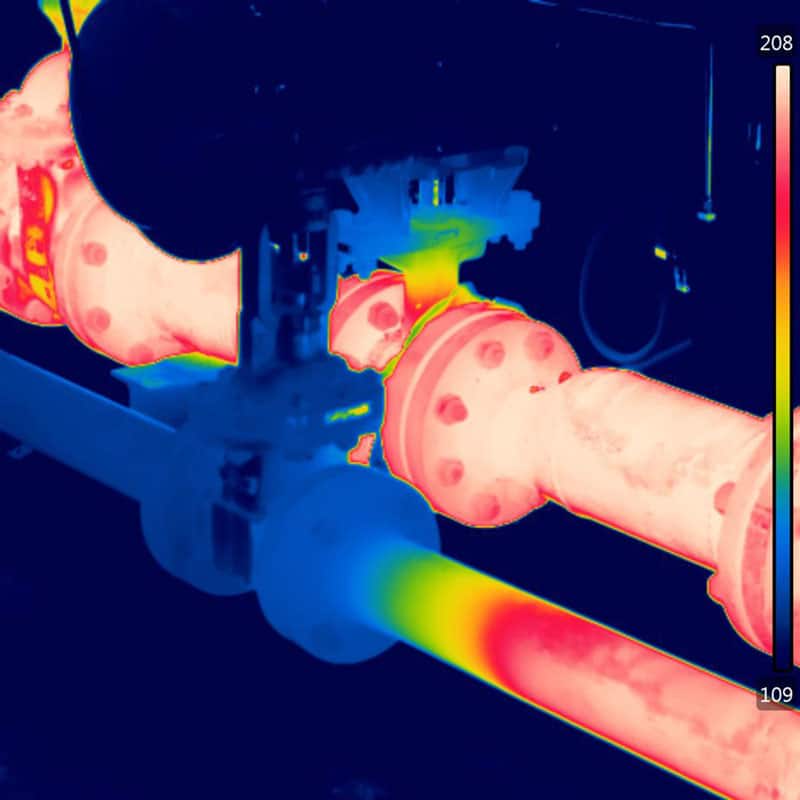
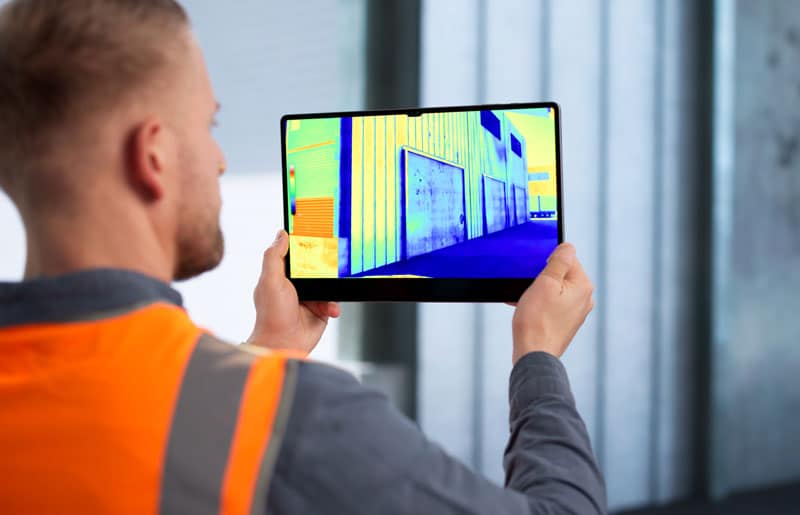
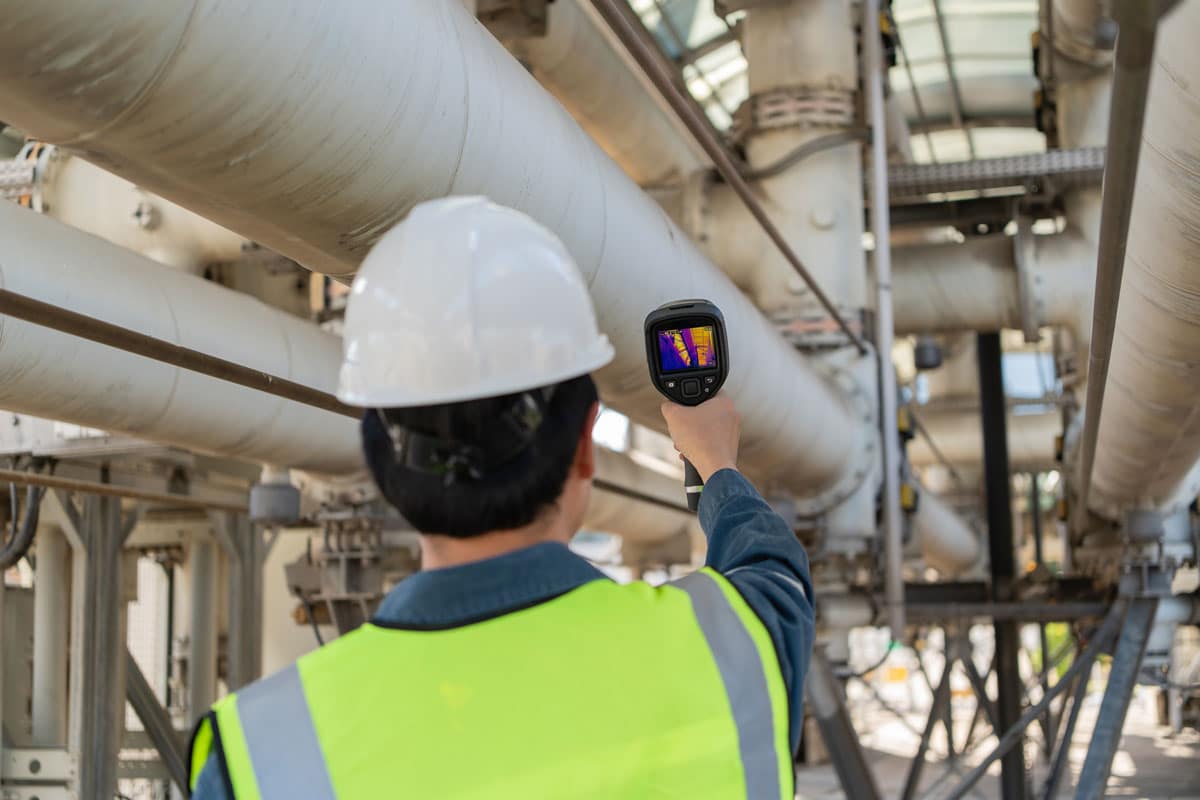
What Is Infrared Thermography?
All objects emit infrared radiation based, among other factors, on their temperature.
A thermal camera detects this radiation and produces an image representing apparent temperature differences on the surface of materials.
These differences can sometimes reveal conditions that are not directly visible.
- A colder area.
- A warmer area.
- An unusual difference between two sections of a wall.
- An anomaly around a window.
- A variation on a roof.
The objective, however, is not simply to produce a colourful image.
The true value of building thermography lies in interpreting observed anomalies based on the materials, construction, environmental conditions and the issue being investigated.

A Thermal Camera Does Not See Through Walls
This is an important distinction.
Infrared thermography does not allow us to see directly what is behind a wall or beneath a roof.
Instead, it measures the apparent temperatures of the surfaces being observed.
These variations can provide clues about certain concealed conditions, but they must be interpreted carefully.
A thermal anomaly can have several potential causes.
- Moisture.
- Insulation.
- Air movement.
- Different materials.
- Thermal bridging.
- Sun exposure.
- Equipment located behind a surface.
This is why thermography is particularly effective when integrated into a comprehensive technical building inspection, rather than used as a stand-alone tool.
Investigating Water Infiltration
Thermography can be used as a complementary tool in certain water infiltration investigations.
When a material becomes wet, its thermal properties may differ from those of the surrounding dry materials.
Under favourable conditions, this difference can create a detectable thermal anomaly.
The inspection can therefore help to:
- Identify areas showing anomalies
- Guide investigations
- Delineate certain areas requiring verification
- Compare different sections of an assembly
- Target locations requiring additional verification
- Document observed conditions
A thermal anomaly alone, however, does not confirm the presence of water.
Rather, it represents a clue that can help guide the diagnostic process.
Thermography and Roof Inspection
Roofing systems can benefit from the use of thermography under certain conditions.
Water infiltration can sometimes affect materials beneath the membrane without immediately producing obvious signs inside the building.
Depending on the type of roof, its composition and inspection conditions, a thermographic analysis can help identify areas exhibiting different thermal behaviour.
These areas can then be investigated further.
This approach can be particularly useful to:
- Locate certain anomalies
- Target areas for investigation
- Guide exploratory testing
- Assess the potential extent of a problem
- Document certain conditions before rehabilitation work
The objective is to gather additional information before determining the extent of the required interventions.
Detecting Insulation Deficiencies
Missing, displaced, compressed or discontinuous insulation can alter the thermal behaviour of a building assembly.
When indoor and outdoor conditions create a sufficient temperature differential, these anomalies may sometimes become visible using an infrared camera.
The inspection may include:
- Exterior walls
- Ceilings
- Roofs
- Interfaces
- Transition areas
- Areas around openings
- Sections presenting discomfort or a known issue
Thermography can then help target areas that may require further investigation.
Thermal Bridges
A thermal bridge is an area of the building envelope where heat transfer differs from that of adjacent surfaces.
Certain structural and construction transitions can create these conditions.
- Slabs.
- Beams.
- Columns.
- Fasteners.
- Window perimeters.
- Junctions between systems.
Thermography can help visualize some of these thermal behaviours.
This information can be relevant when a building presents:
cold surfaces, localized condensation, comfort issues or recurring anomalies at certain interfaces.
Detecting Air Leakage
Air infiltration and exfiltration can also influence surface temperatures.
Under certain conditions, a thermographic inspection can help locate areas showing anomalies consistent with air movement.
These may include:
- Windows
- Doors
- Joints
- Transitions between materials
- Wall-to-roof junctions
- Penetrations
- Building envelope interfaces
Depending on the nature of the mandate, thermography can be combined with other investigation methods to better characterize the issue.
Facade Thermography
A facade can present thermal variations associated with several phenomena.
- Insulation.
- Moisture.
- Interfaces.
- Thermal bridges.
- Differences in materials.
- Environmental conditions.
Thermographic inspection can make it possible to compare different areas and identify unusual behaviour.
It becomes particularly useful when it complements broader building envelope expertise.
Thermal images can then be correlated with visual observations, construction details, reported problems and the building’s history.
Investigation Around Windows and Openings
Windows are complex building envelope interfaces.
- Frame.
- Glazing.
- Joints.
- Perimeter insulation.
- Flashings.
- Connections to walls.
A thermal anomaly around an opening can provide a clue regarding a potential deficiency.
Thermography can help identify differences around frames, headers, sills and perimeter connections.
Further investigation can then be recommended to determine the cause.
Moisture and Condensation
A cold surface is not necessarily wet.
Conversely, a wet area is not necessarily detectable through thermography under all conditions.
Thermography should therefore be used as an investigation tool, not as an automatic conclusion.
When an anomaly is observed, it can be correlated with:
- Moisture measurements
- Visual inspection
- Indoor conditions
- Outdoor conditions
- Water infiltration history
- Assembly composition
- Other verification methods
This combination helps reduce the risk of incorrectly interpreting a thermal variation.
Mold Investigation: Understanding the Limitations of Thermography
An infrared camera does not directly detect mold.
It can, however, help identify certain conditions, including thermal anomalies or potentially damp areas, that may justify further investigation.
This distinction is essential.
The presence of particular colours in a thermal image does not constitute proof of fungal contamination.
When an indoor air quality or contamination issue is suspected, an appropriate investigation must be carried out.
Thermography helps guide the investigation; it does not replace proper characterization.
Inspection Conditions Are Critical
The quality of a thermographic inspection depends greatly on the conditions under which it is performed.
- Indoor temperature.
- Outdoor temperature.
- Sun exposure.
- Wind.
- Rain.
- Humidity.
- Time of day.
- Materials being observed.
- Recent weather history.
For example, a facade heated directly by the sun may exhibit significant thermal differences that do not correspond to a building deficiency.
The timing of the inspection must therefore be selected according to the issue being investigated and the type of component being assessed.
Thermography and Complementary Investigations
When an anomaly is identified, other methods may be used to further investigate the condition.
Depending on the issue, these may include:
- Moisture measurements
- Close-up visual inspection
- Exploratory testing
- Exploratory openings
- Water testing
- Waterproofing verification
- Review of plans and details
- Material investigation
Thermography therefore becomes a tool for better targeting investigations, rather than unnecessarily opening or testing large areas.
Documenting Thermal Anomalies
Depending on the mandate, inspection results may be documented using thermal images and conventional photographs.
This combination makes it possible to correlate what the infrared camera detects with what is actually visible on the building.
The report may include:
- Areas inspected
- Conditions at the time of inspection
- Thermal images
- Corresponding photographs
- Observed anomalies
- Location of affected areas
- Interpretation of results
- Limitations
- Recommended additional investigations
- Corrective measures to consider when the cause can be sufficiently established
This documentation can be particularly useful for monitoring an issue or planning future work.