
BUILDING CONDITION ASSESSMENT

Environmental site characterization experts. Phase I & II assessment.

Engineering studies and materials quality control.

We carry out a multitude of tests on granular materials.

Building inspection and technical assessment, evaluation, and monitoring.
Engineering studies and materials quality control.
We carry out a multitude of tests on granular materials.
Building inspection and technical assessment, evaluation, and monitoring.
Building Condition Assessment | BCA, PCA
Groupe SCP’s building division offers comprehensive expertise in building condition assessment | BCA, PCA, technical audits, and investment planning.

Groupe SCP assists owners and property managers in the technical assessment of their buildings to identify deficiencies, establish intervention priorities and better plan short-, medium- and long-term investments.

Building Condition Assessment | BCA, PCA, Technical Audit and Capital Planning
Groupe SCP offers specialized building condition assessment services, including BCA (Building Condition Assessment), PCA (Property Condition Assessment) and technical audits.
These assessments allow owners, property managers, investors and other decision-makers to better understand the physical condition of a building, identify observed deficiencies and plan for future maintenance, repair, replacement or rehabilitation work.
- Roofing.
- Building envelope.
- Foundations.
- Structure.
- Parking structures.
- Interior components.
Mechanical and electrical systems, depending on the scope of the mandate.
A building represents an important asset whose various components age at different rates. A building condition assessment transforms a multitude of technical observations into structured information that can support decision-making.
Transforming Reactive Maintenance Into Preventive Management
Waiting until a component fails or water infiltration appears can be costly.
Reactive maintenance often means urgency, disruption of operations and less budgetary flexibility.
Periodic assessment instead makes it possible to anticipate.
- Inspect.
- Prioritize.
- Budget.
- Plan.
- Intervene.
- Then reassess.
This approach makes it possible to manage the building as a long-term asset rather than as a succession of problems to be resolved.
Groupe SCP | BCA, PCA and Building Technical Audits
Groupe SCP assists owners, investors and property managers with the assessment of the condition of their buildings.
Our approach is designed to transform technical information into a decision-making tool.
- Understand the current condition.
- Identify deficiencies.
- Assess future needs.
- Establish priorities.
- Plan interventions.
- Anticipate investments.
Whether the mandate involves a BCA, PCA, technical audit, real estate acquisition or asset management strategy, a better understanding of the building’s physical condition makes it possible to make more informed decisions.
Because a building should not only be assessed according to what it is worth today.
It is also necessary to understand what will need to be invested to maintain that value tomorrow.


What Is a Building Condition Assessment?
A building condition assessment is intended to provide an overall picture of the physical condition of a property and its main components.
Depending on the mandate, the analysis may include:
- Review of available documentation
- Visual inspection of the building
- Assessment of various components
- Identification of apparent deficiencies
- Photographic documentation
- Assessment of the general condition of systems
- Identification of anticipated repairs or replacements
- Establishment of intervention priorities
- Budget estimates for certain work
- Planning of future investments
- Preparation of a technical report
The objective is not simply to compile a list of problems.
It is to provide a comprehensive and structured overview of the condition of the real estate asset.

BCA – Building Condition Assessment
A Building Condition Assessment (BCA) is an evaluation of the physical condition of a building and its various components.
This process can be particularly relevant for owners and property managers who want to better understand their real estate assets and anticipate upcoming work.
A BCA can help answer essential questions such as:
- What is the current condition of the building?
- Which components have deficiencies?
- Which work should be considered a priority?
- Which systems are approaching the end of their useful life?
- What investments may be required over the next few years?
A BCA therefore becomes a tool for moving from primarily reactive management to more predictable maintenance and capital planning.
PCA – Property Condition Assessment
A Property Condition Assessment (PCA) is commonly used in the context of a technical assessment of a property.
It can support decisions related to:
the acquisition of a building, financing, investment, asset management or the establishment of a technical overview of the property.
When an investor is considering purchasing a building, the acquisition price represents only one part of the equation.
- A roof may need to be replaced.
- A facade may require rehabilitation.
- A parking structure may have deficiencies.
- Certain equipment may be approaching the end of its useful life.
- These needs may represent significant investments following the acquisition.
A PCA therefore makes it possible to integrate the physical condition of the building into the property analysis.
Building Technical Audit
A building technical audit examines its condition and identifies deficiencies, interventions and technical issues that may influence its management.
The scope of the audit is defined according to:
the type of building, its age, its use, the owner’s concerns and the objectives of the mandate.
Depending on the needs, the assessment may cover several categories of components to provide an overall perspective.
A technical audit can be useful in the context of:
- A real estate acquisition
- Work planning
- A maintenance strategy
- Budget preparation
- Real estate portfolio management
- A change of use or renovation project
- A general assessment of an asset’s condition
It provides a technical basis for better understanding what the owner actually owns and what may eventually need to be invested in the building.
Building Envelope Inspection
The building envelope is an important part of a condition assessment.
Depending on the mandate, the analysis may consider:
- Facades
- Exterior walls
- Cladding
- Fenestration
- Doors
- Joints
- Flashings
- Waterproofing
- Signs of infiltration
- Visible deterioration of materials
Building envelope deficiencies can influence:
durability, waterproofing and future rehabilitation requirements.
A good understanding of their condition makes it possible to better anticipate the associated interventions and investments.
Roof Assessment
The roof is generally one of the important components to consider in capital planning.
An assessment may include:
- Type and condition of the roofing system
- Visible membranes
- Flashings
- Parapets
- Drains
- Penetrations
- Existing repairs
- Signs of deterioration
- Signs of infiltration
- General condition of accessible components
An aging roof does not automatically mean that it must be replaced immediately.
Rather, the assessment makes it possible to integrate its condition into the overall picture and determine whether:
maintenance, repair or rehabilitation work should be considered.
Foundations, Concrete and Structural Elements
Accessible structural components may also be included in the assessment.
- Foundations.
- Slabs.
- Walls.
- Beams.
- Columns.
- Concrete elements.
Depending on the mandate and the conditions observed, the inspection may identify indications such as:
- Cracks
- Concrete deterioration
- Apparent corrosion
- Deformation
- Infiltration
- Previous repairs
- Other visible anomalies
A condition requiring specialized investigation can then be identified in the recommendations.
A BCA or PCA does not necessarily replace specialized expertise when a particular issue is discovered.
Its purpose is precisely to identify areas where a more in-depth investigation may be required.
Parking Structures and Building-Related Site Components
Indoor, underground or multi-level parking structures can represent significant assets to maintain.
Depending on the scope of the mandate, the assessment may consider slabs, concrete elements, cracks, infiltration, joints, drainage and apparent signs of deterioration.
Exterior site components may also require particular attention depending on the type of property.
The objective remains to identify components that may require maintenance, repair, rehabilitation or replacement within the selected planning horizon.
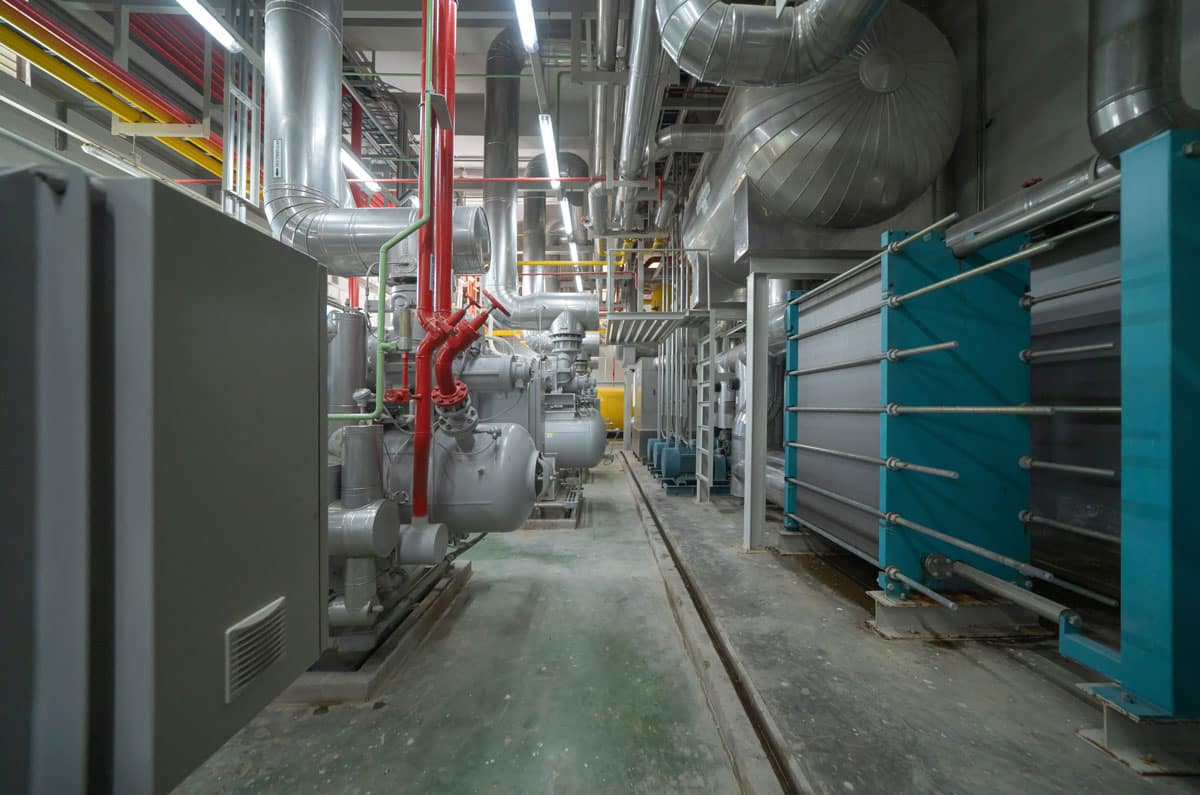
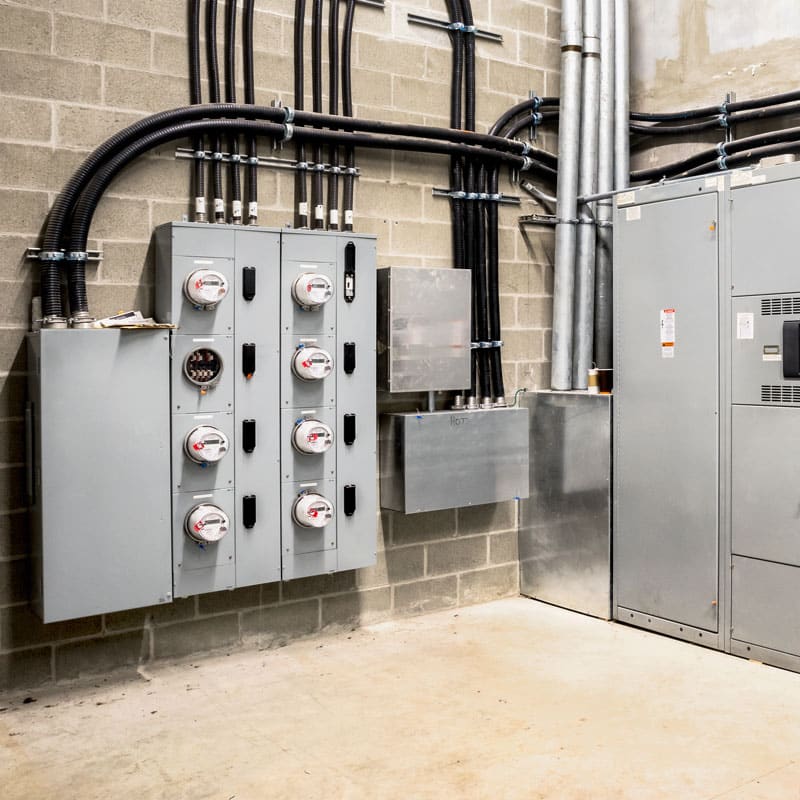
Mechanical and Electrical Systems
Depending on the scope of the BCA, PCA or technical audit, the analysis may also consider various mechanical and electrical systems within the building.
These may include, heating, ventilation, air conditioning, plumbing, electrical distribution, lighting and other major equipment.
The objective is to document their general condition, their age when it can be determined, apparent deficiencies and replacements or interventions that may need to be planned.
For owners, these systems are particularly important because a major replacement can represent a significant investment.
Understanding the Useful Life of Building Components
Not all building systems have the same useful life.
- A roof.
- A membrane.
- A window.
- A mechanical system.
- An electrical component.
- Exterior cladding.
- A piece of equipment.
Each has its own maintenance and replacement cycle.
A building condition assessment puts these different cycles into perspective.
A component may still be functional today while requiring a significant investment within a few years.
This distinction is fundamental to real estate planning.
The absence of an immediate problem does not mean the absence of a future expense.
Identifying and Prioritizing Deficiencies
Not all deficiencies have the same level of importance. Some may require prompt intervention. Others may be incorporated into a maintenance program. Still others can be monitored and planned over a longer term.
A structured assessment therefore makes it possible to prioritize needs according to different time horizons.
Short Term: Priority interventions, significant deficiencies or work that cannot reasonably be postponed.
Medium Term: Repairs and replacements that can be planned over the next few years.
Long Term: Aging components and investments to anticipate as part of the overall asset management strategy.
This prioritization transforms the technical report into a planning tool.
Capital Expenditure Planning
One of the major benefits of a BCA or PCA is its ability to support capital expenditure planning.
An owner may know that a building will eventually require work.
But without a structured assessment, it becomes difficult to determine:
what, when and in what order.
A projection of future needs makes it possible to anticipate investments rather than discover them when a component suddenly reaches the end of its useful life.
This planning can support:
- Budget preparation
- Reserve management
- CAPEX planning
- Project prioritization
- Maintenance strategies
- Investment decisions
- Real estate portfolio management
The objective is to give decision-makers better visibility into the future technical obligations of the asset.
BCA and CAPEX Planning
In a commercial or institutional real estate context, CAPEX – Capital Expenditures represents the major investments required to maintain and improve the asset.
A BCA can help identify and organize these needs.
For example:
- A roof may require rehabilitation within a few years.
- Facade joints may need to be replaced sooner.
- A mechanical system may be approaching the end of its useful life.
- Certain concrete repairs may be a priority.
Rather than considering these expenses individually as they arise, the assessment makes it possible to integrate them into a multi-year financial outlook for the building.
Technical Assessment Before Purchasing a Building
A major real estate transaction should consider more than location, revenue, tenants and asking price.
The physical condition of the building can have a considerable impact on the true value of the investment.
A PCA as part of an acquisition can help the buyer identify expenses that may not necessarily be apparent during a general visit.
A property may appear well maintained while having several major components simultaneously approaching the end of their useful life.
This information can influence the purchase decision, financial planning and investment strategy.
An Important Component of Real Estate Due Diligence
As part of a transaction, the technical assessment fits within a broader real estate due diligence process.
The objective is to reduce unknowns before making an important decision.
- What work is visible?
- What investments can be anticipated?
- Do certain deficiencies require specialized expertise?
- Are there issues that could influence future costs?
A PCA therefore provides a technical perspective that complements the financial, legal and commercial analyses carried out as part of an acquisition.
BCA for Building Owners and Property Managers
It is not necessary to sell or purchase a building to benefit from a condition assessment.
For a long-term owner, a BCA can become a particularly useful management tool.
It makes it possible to establish a baseline assessment of the building’s condition, then use this information to structure maintenance and rehabilitation programs.
This approach is particularly relevant for:
- Commercial building managers
- Industrial property owners
- Institutions
- Real estate portfolio managers
- Multi-residential property owners
- Real estate companies
- Asset managers
A manager who knows the condition of their buildings can make better decisions than one who discovers problems as they occur.
Real Estate Portfolio Assessment
When an organization owns several buildings, planning becomes even more important.
Needs must no longer be prioritized only within a single building.
They must be compared across multiple assets.
- Which building requires the most urgent investments?
- Which projects can be grouped together?
- Where are the risks of deterioration the greatest?
- How should available budgets be allocated?
A structured approach to building assessment can provide a common basis that allows managers to establish priorities across an entire real estate portfolio.
Document Review and Building History
The physical inspection is only one part of the assessment.
When available, various documents can contribute to a better understanding of the asset:
- Plans
- Previous inspection reports
- Maintenance history
- Roofing reports
- Rehabilitation work
- Equipment replacements
- Technical documents
- Warranties
- Specialized reports
The building’s history can explain certain observed conditions and provide a better understanding of the actual age of different components or the interventions carried out on them.
The more complete the historical picture, the more useful the analysis of the current condition can be.
BCA / PCA and Technical Audit Report
Depending on the mandate, the report may include:
- General description of the building
- Scope of the assessment
- Documentation reviewed
- Components inspected
- General condition observed
- Deficiencies identified
- Photographs
- Recommendations
- Intervention priorities
- Suggested additional investigations
- Anticipated repair or replacement work
- Budget estimates when included in the mandate
- Planning of needs according to different time horizons
The objective is to provide a document that is clear, structured and usable by decision-makers.