
FOUNDATIONS, CONCRETE & STRUCTURAL CONDITIONS

Environmental site characterization experts. Phase I & II assessment.

Engineering studies and materials quality control.

We carry out a multitude of tests on granular materials.

Building inspection and technical assessment, evaluation, and monitoring.
Engineering studies and materials quality control.
We carry out a multitude of tests on granular materials.
Building inspection and technical assessment, evaluation, and monitoring.
Foundations, Concrete & Structural Conditions
Groupe SCP’s Building division carries out concrete assessments, inspection, diagnosis and repair recommendations.

Groupe SCP brings its building expertise to the assessment of foundations, structural elements and concrete components in commercial, industrial, institutional and multi-residential buildings.

Foundation, Concrete and Structural Element Inspection | Assessment and Diagnosis
Groupe SCP provides specialized foundation, concrete and structural element inspection services to assess their condition, identify signs of deterioration and better understand the source of observed deficiencies.
- Foundation cracks.
- Concrete deterioration.
- Water infiltration.
- Visible corrosion.
- Element deformation.
- Settlement or movement.
These conditions can have multiple causes and should not be evaluated based solely on their appearance.
A professional inspection helps document the condition of building components, identify areas requiring particular attention and guide owners, managers and other stakeholders toward appropriate corrective measures.
Preventive Inspection of Structural Components
It is not always necessary to wait until a significant problem appears before having a building inspected.
For owners and managers of commercial, industrial, institutional and multi-residential buildings, a preventive approach can help identify signs of deterioration before they become more significant.
This approach also facilitates:
- Work planning
- Establishing priorities
- Budget preparation
- Monitoring known deficiencies
- Maintaining a history of the building’s condition
- Long-term investment planning
Building maintenance can therefore become a structured process rather than a succession of emergency interventions.
Groupe SCP | Foundation, Concrete and Structural Expertise
Groupe SCP assists property owners, managers and building professionals with the inspection of foundations, concrete and structural elements.
Our approach begins with understanding the observed condition.
- Inspect.
- Document.
- Analyze.
- Identify deficiencies.
- Assess their significance.
- Recommend the next steps.
This process supports better-informed decisions regarding the maintenance, repair, rehabilitation and long-term durability of building components.
Because when it comes to foundations and structural elements, the visible problem is not always the actual problem.
A successful intervention begins with a proper diagnosis.
Comprehensive Expertise in Foundations and Structural Components
Foundations and structural elements play an essential role in the stability and durability of a building.
Over time, several factors can affect their condition. Ssoil movement, water and moisture, freeze-thaw cycles, material aging, corrosion, loads, previous work or modifications to the building.
Visible signs do not always make it possible to immediately determine the nature or significance of a problem.
A crack may be superficial or require further investigation.
Water infiltration may result from a localized waterproofing deficiency or be associated with a more complex problem.
Concrete deterioration may be limited to the surface or reveal degradation affecting more of the element.
Groupe SCP’s expertise provides a methodical approach to these situations in order to document observed conditions and determine which investigations or interventions should be prioritized.

Foundation Inspection
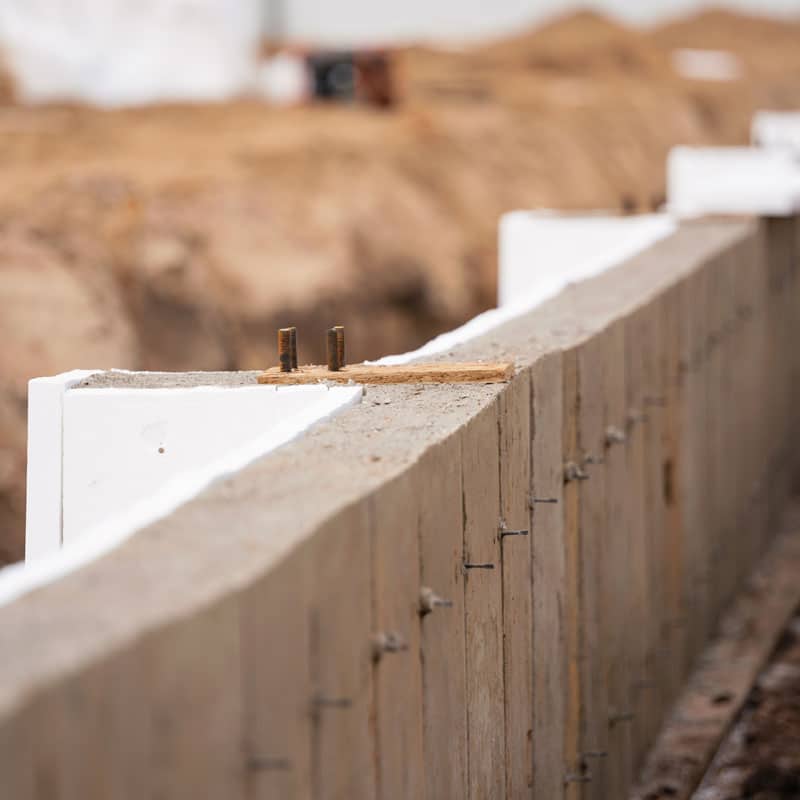
Foundations are exposed to particular conditions because they are in direct contact with the ground and, depending on their configuration, with moisture and groundwater.
An inspection may include an assessment of:
- Visible cracks
- Signs of movement or displacement
- Water infiltration
- Presence of moisture
- Concrete deterioration
- Spalling or crumbling
- Previously repaired areas
- Visible deformation
- Interfaces between foundations and other components
- Signs that may warrant further investigation
The objective is to establish a technical overview of the situation before recommending an intervention.
Identifying a crack is relatively simple. Understanding why it is there is much more important.
Foundation Cracks: Observation, Analysis and Diagnosis
Not all cracks necessarily have the same origin or significance.
Their assessment may consider different factors:
their location, orientation, width, configuration, extent and the presence of related signs.
Attention may also be given to the immediate area surrounding the crack.
- Is there water infiltration?
- Signs of moisture?
- Displacement?
- A previous repair?
- Other similar cracks?
- Known changes over time?
This approach avoids automatically treating the crack as an isolated problem.
When appropriate, monitoring can also help determine whether a condition remains stable or shows signs of progression.
Concrete Inspection and Assessment
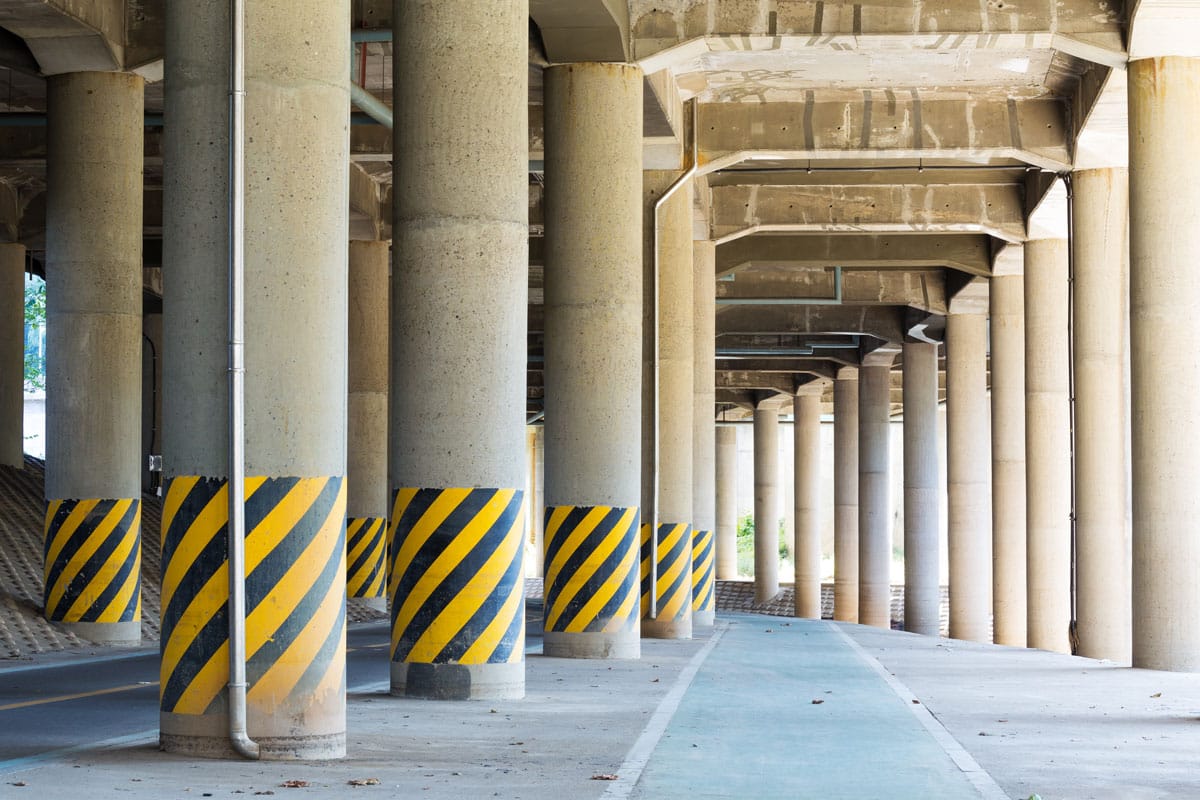
Concrete is widely used in foundations, slabs, walls, columns, beams, parking structures and other building components.
Despite its durability, it can exhibit different forms of deterioration.
Our services may include the assessment of:
- Cracking
- Scaling
- Concrete spalling
- Delamination
- Crumbling
- Exposed reinforcement
- Signs of corrosion
- Water infiltration
- Efflorescence
- Deformation
- Previous repairs
- Localized or widespread deterioration
A concrete inspection helps document visible anomalies and, when necessary, identify further investigations that can better characterize the observed condition.
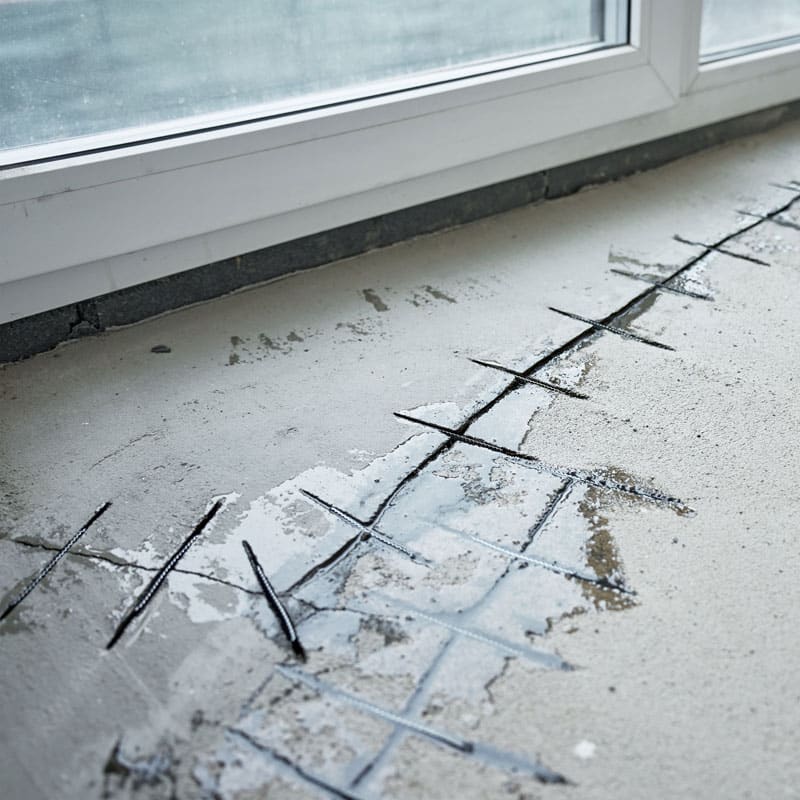
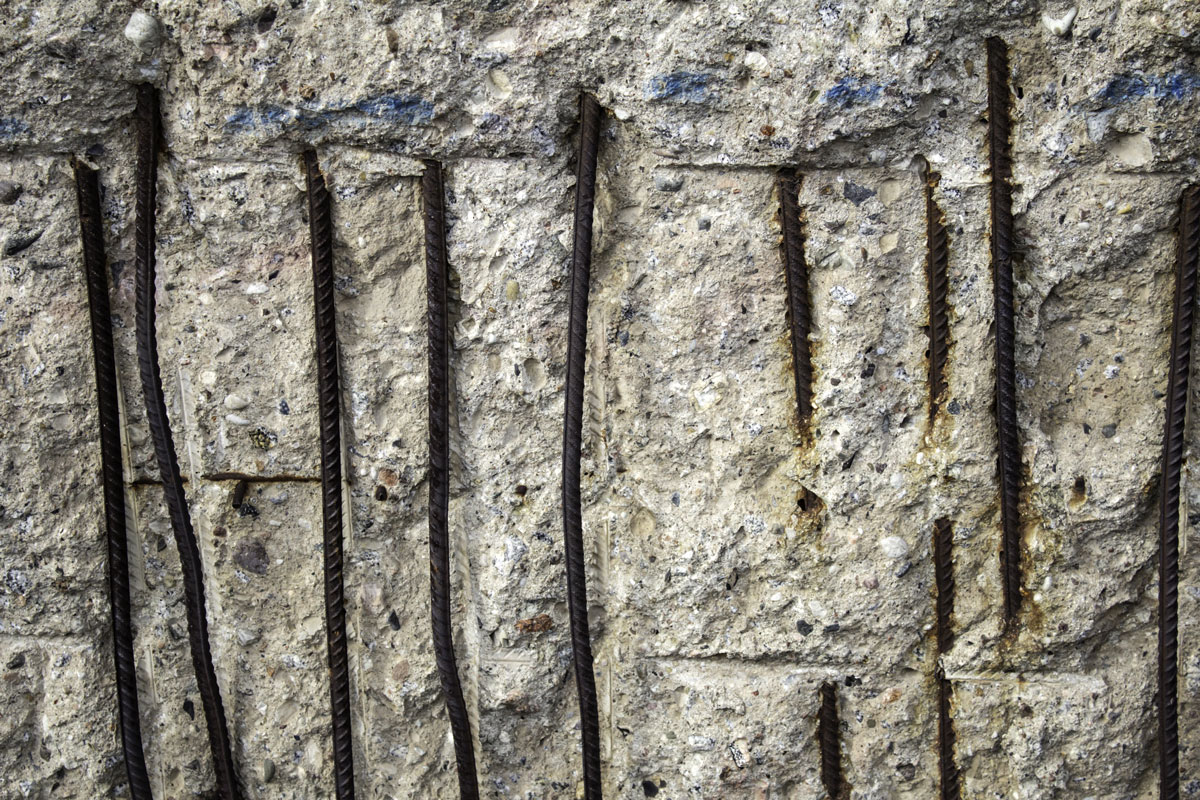
Reinforcement Corrosion and Concrete Spalling
Reinforced concrete combines concrete with steel reinforcement to meet the requirements of the structure.
When certain conditions promote reinforcement corrosion, the resulting expansion can contribute to cracking, delamination and eventually concrete spalling.
Rust staining, cracks running parallel to reinforcement, areas of detached concrete or exposed reinforcement may therefore warrant an assessment.
The objective is to determine the apparent extent of deterioration and define the appropriate interventions.
A durable repair should address not only the visible deteriorated concrete, but also the factors that contributed to its deterioration when they can be identified.
Concrete Slab Inspection
Slabs may be subjected to:
loads, wear, temperature variations, movement, moisture and various conditions of use.
Depending on the building and the context, the inspection may include:
- Cracks
- Visible settlement
- Uneven surfaces
- Spalling
- Delamination
- Wear
- Water infiltration
- Deteriorated joints
- Deformation
- Existing repairs
Slabs can be found in very different environments: industrial buildings, commercial spaces, basements, garages, parking structures and other facilities.
The assessment must therefore always consider the function of the slab and its environment.
Assessment of Walls, Beams, Columns and Other Structural Elements
A building consists of multiple components that work together.
Depending on the scope of the mandate, the inspection may also address various structural elements, including:
- Walls
- Beams
- Columns
- Slabs
- Foundations
- Load-bearing elements
- Concrete components
- Certain steel elements
- Accessible assemblies and interfaces
The inspection aims to identify and document visible signs that may indicate deterioration, deformation or a condition requiring further analysis.
This approach is particularly important when an owner notices a recent change or when a building is undergoing work, renovation or a technical investigation.
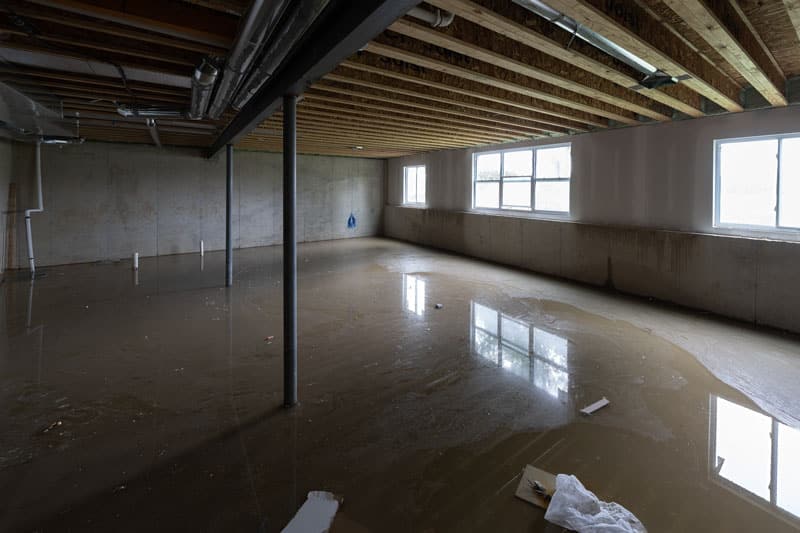
Water Infiltration at Foundations
Water infiltration in a basement or near a foundation can have different origins.
- Cracks.
- Joints.
- Penetrations.
- Interfaces.
- Waterproofing.
- Drainage.
- Surrounding conditions.
The location where water becomes visible inside does not necessarily correspond exactly to its point of entry.
An investigation therefore examines the observed conditions to better identify potential causes.
Depending on the mandate, the investigation may include:
- Locating affected areas
- Documenting water infiltration
- Examining cracks and joints
- Assessing signs of moisture
- Observing the condition of the concrete
- Identifying certain visible deficiencies
- Recommending further investigations or corrective measures
The objective is to avoid a succession of repairs that address the symptoms without resolving the source of the problem.
Settlement, Movement and Deformation
Visible deformation or movement in a building deserves particular attention.
- An uneven floor.
- New cracking.
- Openings that operate differently.
- Visible displacement between certain components.
- Localized settlement.
- These observations alone do not establish a cause.
Rather, they are indicators to consider as part of the overall building assessment.
A professional inspection helps document these conditions and determine whether further investigation is warranted.
Diagnosis Before Repair
When a foundation, concrete or structural problem appears, it can be tempting to proceed immediately with repairs.
However, repairing a condition without sufficiently understanding its cause can result in the problem recurring.
Diagnosis should come before corrective action.
- What is deteriorated?
- What is the apparent extent of the problem?
- What mechanisms could explain the observed condition?
- Does the deficiency appear to be localized or more widespread?
- Is further investigation necessary?
- What corrective strategy should be considered?
This process helps better guide the work and reduce the risk of inappropriate or incomplete interventions.
Technical Expertise and Corrective Work Recommendations
Following the inspection, the findings may help establish recommended interventions.
Depending on the situation, these may include:
- Crack repair
- Concrete repair
- Intervention on delaminated or spalled areas
- Correction of water infiltration problems
- Joint rehabilitation
- Intervention on corroded reinforcement
- Repair or reinforcement of certain components
- Waterproofing work
- Further investigation
- Monitoring of certain conditions
Not all deficiencies necessarily require the same level of urgency.
Technical expertise also helps prioritize interventions and distinguish priority work from interventions that can be planned over time.
Documentation and Inspection Report
Depending on the nature of the mandate, the inspection may be accompanied by a report documenting the conditions observed.
It may include:
- Scope of the mandate
- Observations made
- Deficiencies identified
- Photographic documentation
- Location of problem areas
- Analysis of observed conditions
- Recommendations
- Proposed additional investigations, when required
- Corrective work to be considered
This documentation provides the owner or manager with a technical basis for planning the next steps and communicating with the various stakeholders involved in the work.
Particularly Important Expertise Before Major Work
The assessment of existing components can also be relevant in the context of:
rehabilitation, renovation, alteration, expansion or other changes to a building.
Before undertaking major work, a better understanding of existing conditions helps identify constraints and deficiencies that could influence the project.
This can help better define the work, reduce unforeseen conditions and plan interventions more effectively.